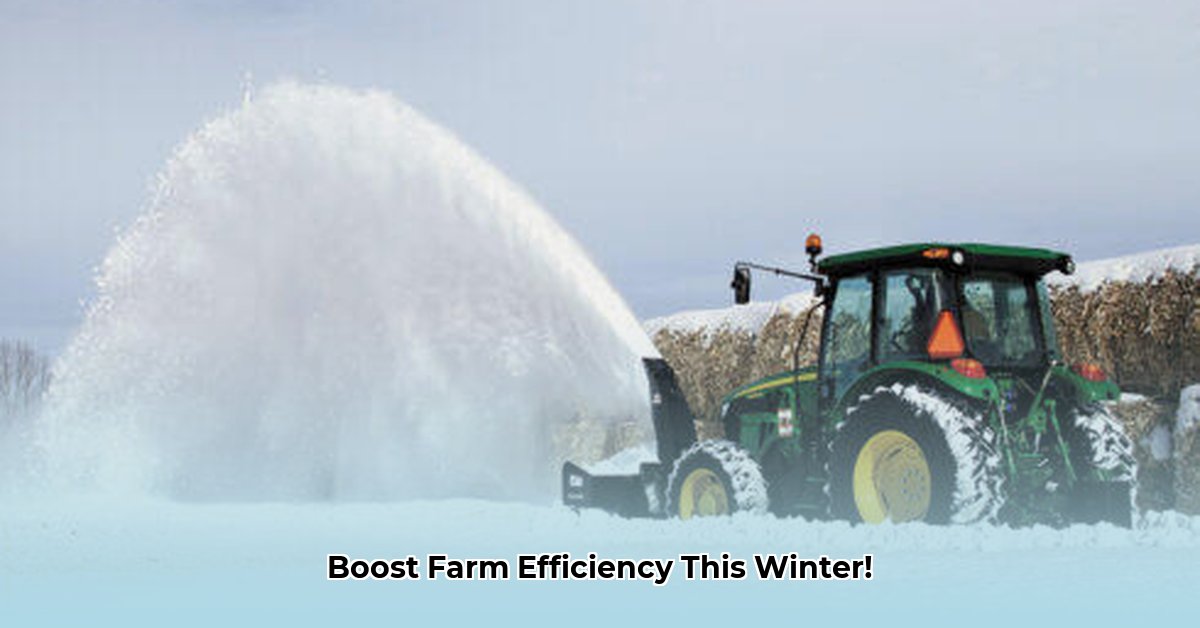
Tractor Front Mount Snowblower: Erskine vs. New Holland – Which is Right for Your Farm?
Winter's harsh grip can significantly impact farm operations. Maintaining efficiency during snowstorms requires reliable equipment, and a tractor front mount snowblower is a crucial tool for many farmers. Erskine and New Holland are prominent manufacturers, but choosing between them requires careful consideration. This comparative review will help you determine which brand best suits your needs and farming practices. For more detailed information on selecting the right snowblower, check out this helpful guide.
Both Erskine and New Holland offer snowblowers designed for easy tractor attachment, minimizing downtime. Both employ hydraulic systems for chute lift and steering, promising efficient snow removal. However, key differences exist in capacity, drive systems, and long-term considerations.
Clearing the Way: Capacity and Drive Systems
A significant difference lies in clearing width. Erskine generally offers a wider range (60-108 inches), compared to New Holland's typical range (63-74 inches). Larger farms or those experiencing heavy snowfall might benefit from Erskine's wider models, potentially reducing the number of passes required. Smaller operations might find New Holland's offerings sufficient. The optimal choice depends on your acreage and typical snowfall.
Another critical factor is the drive system. Erskine emphasizes its shaft drive system, suggesting superior power transmission efficiency, leading to potentially less strain on your tractor's engine and more efficient snow clearing. New Holland's marketing materials don't explicitly detail drive type, necessitating further investigation of specifications. This lack of transparency makes a direct comparison challenging. A comprehensive comparison would ideally include fuel consumption and maintenance cost data for both to enable fully informed decision-making. Furthermore, evaluating the environmental impact – the carbon footprint – of each system is crucial for sustainable farming practices.
Beyond the Specs: The Bigger Picture of Sustainability
Choosing a snowblower impacts farm efficiency and sustainability. Efficient snow removal ensures minimal disruption to daily operations – a critical factor for livestock care and timely supply deliveries. Wider blowers can reduce fuel consumption by minimizing passes across fields. This translates to lower costs and a smaller carbon footprint. Efficient snow removal contributes to better farm management, saving time, money, and reducing environmental impact. Remember to also consider the fuel used during idle time clearing snow with an underpowered machine.
Practical Considerations and the Bottom Line
Before purchasing, assess your needs: How much snow do you typically receive? How many acres require clearing? Accurate estimations will determine the required clearing width and power.
Beyond initial costs, factor in maintenance: expected lifespan, replacement parts costs, and labor time for maintenance. This often-overlooked aspect significantly impacts total cost of ownership.
Consider versatility. Both brands offer quick-attach systems, but investigate compatibility with other attachments. New Holland explicitly mentions compatibility with front blades and rotary brooms, increasing its utility. This added functionality might justify a higher initial investment.
Comparing the Contenders: A Quick Look
This table offers a simplified comparison. Specifications vary within each brand's lineup; always consult manufacturer websites for the latest information.
| Feature | Erskine | New Holland |
|---|---|---|
| Clearing Width | 60"-108" | 63"-74" |
| Drive System | Shaft Drive (Likely Higher Efficiency) | Unspecified |
| Attachments | Information Varies by Model | Compatible with front blades & brooms (often) |
| Price | Varies greatly; check model specifications | Varies greatly; check model specifications |
Potential Pitfalls and Mitigation Strategies
No equipment is flawless. Understanding potential issues and mitigation strategies is crucial.
| Technology Feature | Likelihood of Failure | Severity of Failure | Mitigation Strategy |
|---|---|---|---|
| Hydraulic System | Moderate | High | Regular maintenance, preventative checks by qualified technicians, consider redundant systems |
| Quick-Attach Mechanism | Low | Moderate | Proper operator training, adherence to manufacturer's guidelines |
| Chute Rotation System | Low | Moderate | Regular lubrication, careful operation |
| Drive Train (Shaft/Belt) | Moderate (Shaft-Erskine) | High (if Belt-driven) | Regular inspections, prompt repairs, consider redundant designs. |
Regular maintenance is crucial. Preventative maintenance is always more cost-effective than reactive repairs.
The Final Verdict: It Depends
Choosing a tractor front mount snowblower requires careful consideration of financial and operational long-term impacts. Weigh each brand's pros and cons, factoring in your farm's specific needs, budget, and sustainability goals. Request demonstrations, seek advice from fellow farmers, and analyze the environmental implications. Selecting the right equipment significantly impacts your farm's efficiency and sustainability, particularly during winter.
How to Choose the Best Front-Mount Snowblower for Sustainable Farm Efficiency
Efficient snow removal is critical for maintaining farm access and timely planting/harvesting. Selecting the right front-mount snowblower is an essential aspect of sustainable farming practices.
Powering Through the Winter: PTO vs. Independent Power
Choosing between PTO-driven (Power Take-Off) and independently powered snowblowers is crucial. PTO units are cost-effective but fully dependent on your tractor. Independent models, while more expensive initially, offer greater versatility and flexibility for snow removal, even if the tractor is not running. Consider your tractor's PTO power, capacity to handle additional load, budget, and the need for independent operation.
Erskine vs. New Holland: A Head-to-Head Comparison
Erskine snowblowers are often praised for robust build and powerful performance, ideal for heavy snow. However, they tend to be more expensive. New Holland offers a wider range of sizes and features at competitive price points. However, durability might not match Erskine's in the long term, according to some farmers.
| Feature | Erskine | New Holland |
|---|---|---|
| Price | Generally Higher | Generally Lower |
| Build Quality | Typically Robust | Varies by model; can be less robust |
| Power | High | Varies by model |
| Versatility | Often specialized, fewer options | Wider range of models and features |
| Maintenance | May require specialized expertise | Generally easier to maintain |
Note: Model specifications change. Consult manufacturer websites for accurate information.
Sustaining Efficiency: Beyond the Snowblower
Sustainable practices extend beyond the snowblower itself. Consider:
- Fuel Efficiency: Diesel units often provide better fuel economy than gasoline.
- Environmental Impact: Choose lower-emission models.
- Maintenance: Regular maintenance extends equipment life and minimizes downtime.
Selecting the Right Snowblower: Step-by-Step Guide
- Assess your needs: Snowfall, terrain, acreage.
- Set your budget: Initial cost, maintenance, fuel.
- Research brands and models: Compare features, specs, and reviews.
- Consider power source: PTO or independent power based on your tractor and budget.
- Choose the right size: Match the snowblower's capacity to your tractor and snow conditions.
- Consult your local dealer: Professional guidance for your specific needs.
Key Takeaways:
- Efficient snow removal is vital for year-round farm operations.
- Front-mount snowblowers offer superior maneuverability.
- Independent power provides greater flexibility, but at a higher cost.
- Consider fuel efficiency, environmental impact, and maintenance.
- Thoroughly research brands and models before purchasing.